Creatine Monohydrate: Not Just for Muscle


Exploring the emerging science of creatine for cognitive enhancement, memory, and neuroprotection.
The Brain’s Backup Battery: Why Creatine Monohydrate is the Ultimate Cognitive Enhancer
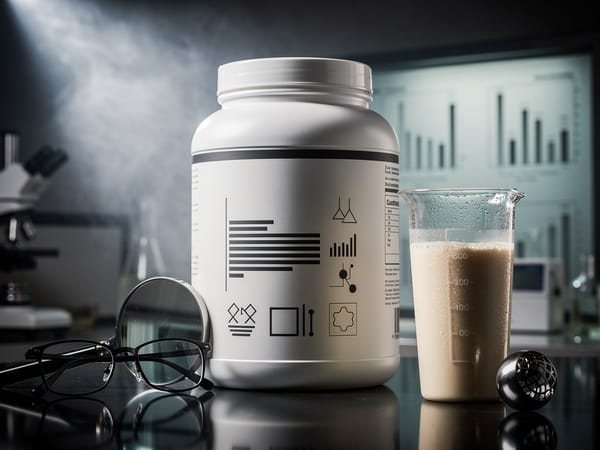
For decades, the white, crystalline powder known as creatine monohydrate has been pigeonholed. If you walk into any commercial gym, you will find it in the lockers of powerlifters, sprinters, and bodybuilders. It is universally recognized as the most heavily researched, undeniably effective sports nutrition compound on the market for increasing fast-twitch muscle fiber size and explosive power.
Because of this deeply ingrained fitness association, the average professional - the software engineer, the writer, the busy parent - often completely dismisses it. They assume that if they aren’t trying to bench press 300 pounds, creatine has no place in their pantry.
But modern neuroscience is rapidly rewriting the narrative.
The biological mechanisms that make creatine so spectacularly effective at allowing a muscle to contract under heavy loads are the exact same mechanisms that allow the human brain to process complex information, recall memories, and protect itself against neurological stress. We are now entering an era where creatine is being viewed not just as a sports supplement, but as a foundational compound for cognitive enhancement and neuroprotection.

The Biochemistry of Thought: The Brain’s Energy Crisis
To understand why a "muscle building" compound is causing such a stir in the neuroscience community, we have to look at how the human body handles energy demand.
Every cell in your body runs on a microscopic currency called adenosine triphosphate (ATP). When a cell needs to perform a function - whether that is contracting a bicep or firing a neuron to solve a math problem - it breaks off a phosphate molecule from ATP, turning it into ADP (adenosine diphosphate).
The problem is that cells can only store a tiny, fleeting amount of ATP. During moments of intense demand, that ATP is depleted in a matter of seconds. This is where creatine steps in. Creatine is stored in the body as phosphocreatine. It acts as a rapid-response energy donor, willingly handing its phosphate molecule over to the spent ADP, instantly regenerating it back into usable ATP.
Here is the neurological catch: while your brain only accounts for about 2% of your total body weight, it consumes an astonishing 20% of your body’s total baseline energy. The brain is a massive, relentless ATP furnace. During complex cognitive tasks, sleep deprivation, or mental fatigue, the brain’s demand for ATP outpaces its ability to produce it. By maintaining a robust pool of phosphocreatine in the brain, the neurological engine essentially gains a high-capacity backup battery, ensuring neurons can continue to fire efficiently even under severe mental stress.
Cognitive Enhancement and Working Memory
The practical application of this "backup battery" effect is extraordinary, particularly when the brain is pushed to its limits. When you are well-rested and completely stress-free, the cognitive benefits of higher creatine stores might be subtle. But the moment the central nervous system is taxed, the compound shines.
A landmark systematic review of clinical trials demonstrated that higher levels of brain creatine significantly improve short-term memory and intelligence/reasoning tasks. This effect was most pronounced in scenarios involving mental fatigue or partial sleep deprivation.
When researchers observe the brains of individuals attempting to solve complex mathematical equations or perform difficult spatial recall tasks, those with optimal phosphocreatine stores exhibit far less cognitive degradation over time. Their brains simply do not "gas out" as quickly. The neurons have the rapid ATP regeneration required to maintain the structural integrity of thought, allowing for extended periods of intense, unbroken focus.

The Shield: Neuroprotection and Cellular Resilience
Perhaps the most exciting frontier of creatine research lies in its potential to protect the brain from physical and biochemical damage. Neurological stress - whether from a traumatic brain injury (TBI), a mild concussion, or simply the oxidative stress associated with aging - causes a massive disruption in cellular energy metabolism.
When a brain cell is damaged or deprived of oxygen (hypoxia), its ATP levels plummet. If the ATP levels drop too low, the cell ultimately dies.
By saturating the brain with phosphocreatine, researchers hypothesize that we can provide a crucial energetic buffer. Studies surrounding creatine and traumatic brain injury suggest that having a surplus of this energy donor can significantly mitigate the secondary damage that occurs after a neuro-trauma. It helps preserve the delicate cellular infrastructure of the brain during a crisis, giving the neurons the metabolic fuel they need to survive the initial insult and initiate the repair process. This has profound implications not just for contact sport athletes, but for long-term neurological longevity.
The Dietary Divide: Why Plant-Based Eaters Notice It Most
The clinical data reveals one particularly fascinating caveat regarding who experiences the most dramatic cognitive benefits from optimal creatine levels.
Creatine is naturally synthesized by the human body in small amounts, but a significant portion of our stores typically comes from our diet. However, creatine is found exclusively in animal tissue - primarily red meat and certain fish. Because plants contain zero creatine, individuals who adhere to strict vegan or vegetarian diets inherently possess much lower baseline levels of muscular and neurological phosphocreatine.
Consequently, when plant-based eaters are observed in cognitive trials, their performance leaps are often the most statistically significant. Because their brain’s "backup battery" is naturally running at a lower capacity, providing the physiological means to top off those stores results in profound, highly noticeable improvements in memory recall, mental processing speed, and resistance to mental fatigue.
Ultimately, creatine monohydrate is undergoing a massive scientific rebranding. It is time to look past the barbell and recognize this compound for what it truly is: a fundamental facilitator of cellular energy, capable of building a more resilient, highly optimized human brain.
Unlock Better Results From Your Supplements
Join now and receive practical advice on supplements, workout nutrition, and vitamins that support your health and performance.