Decoding Pre-Workout Labels

Separating the science-backed performance enhancers (Citrulline, Beta-Alanine) from the useless fillers and proprietary blends.
Smoke, Mirrors, and Proprietary Blends: How to Read a Pre-Workout Label Like a Sports Scientist
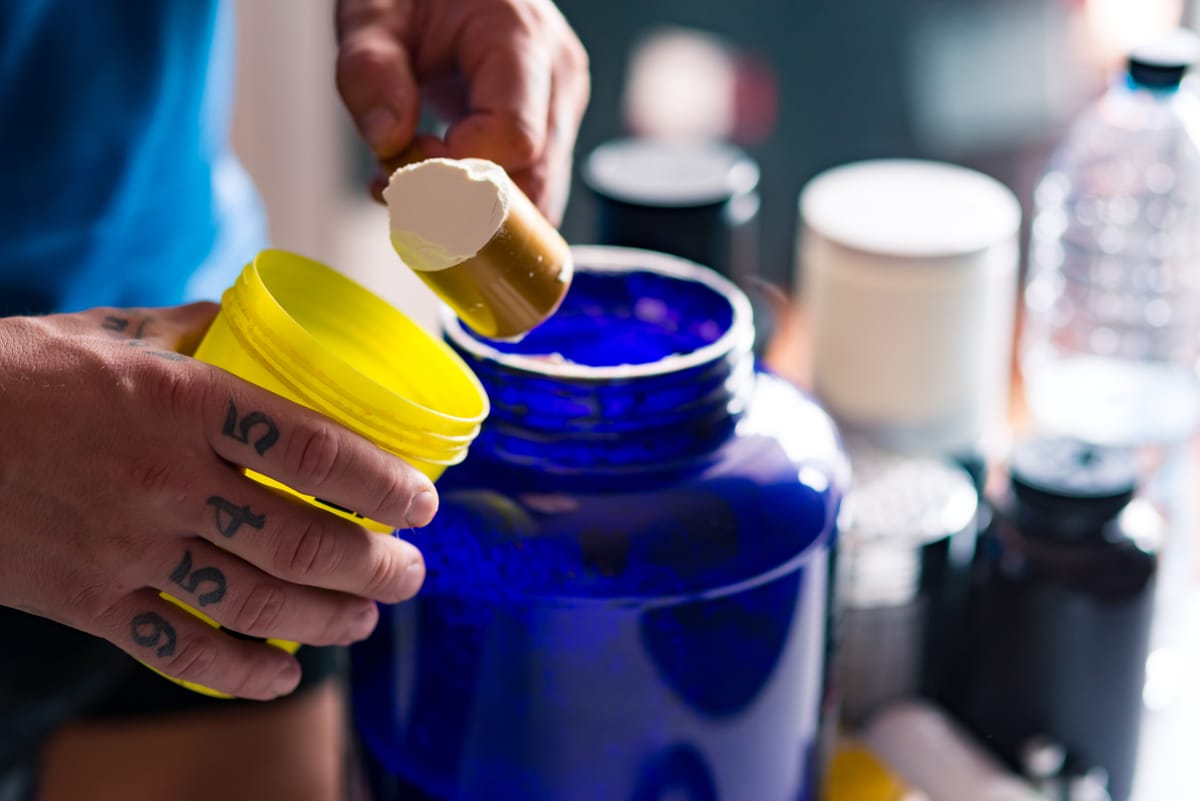
Walk into any sports nutrition store, and you are immediately assaulted by a wall of neon plastic tubs featuring aggressive fonts and explosive graphics. The marketing copy on the front promises the world: skin-tearing pumps, infinite stamina, cellular expansion, and laser-like focus. It is designed to tap into your desire for a better, more intense workout.
But if you flip that brightly colored tub around and look at the actual nutritional panel, the story often changes drastically.
The pre-workout industry is a multi-billion-dollar machine, and unfortunately, it is historically built on a foundation of clever marketing rather than robust biochemistry. Many of the most popular, best-selling powders on the market are little more than heavily flavored caffeine mixed with cheap, biologically useless fillers. If you want to stop wasting your money on expensive, jitter-inducing flavored water, you have to learn how to bypass the marketing hype.
You need to learn how to read a pre-workout label like a scientist. Here is the actual physiology behind the ingredients that work, the ones that don't, and the biggest red flag in the entire supplement industry.

The Ultimate Red Flag: The Proprietary Blend
Before we even discuss specific performance-enhancing compounds, we have to address the industry’s favorite legal loophole: the proprietary blend.
When you look at an ingredient panel, you should see each individual compound listed alongside its exact milligram weight. However, many brands group several ingredients together under a trademarked name - like "Explosive Pump Matrix" or "Cellular Energy Blend" - and only list the total weight of the entire blend.
Manufacturers claim this is to protect their "secret formulas" from being stolen by competitors. In reality, the science of sports nutrition is public information; there are no secrets. Proprietary blends are almost exclusively used to hide chronic underdosing.
By law, ingredients in a blend must be listed in descending order by weight. So, a brand might create a 5,000-milligram "Muscle Matrix" where the first ingredient is an incredibly cheap filler like maltodextrin or low-grade taurine, taking up 4,900 milligrams. The actual expensive, scientifically backed ingredients listed underneath might only account for a microscopic fraction of the blend. You are paying a premium price for a sprinkle of the active compound. If a brand isn't completely transparent about what is in the tub, put it back on the shelf.
The Vasodilator: L-Citrulline vs. L-Arginine
When it comes to the physical sensation of a "pump" - the engorgement of the muscle with blood during training - the biological mechanism we are targeting is vasodilation.
Vasodilation is the widening of your blood vessels. This process is driven by a signaling molecule called nitric oxide. By increasing nitric oxide production, blood vessels relax and expand, allowing for a massive increase in the delivery of oxygen and nutrient-rich blood to working muscle tissue.
For years, supplement companies packed their pre-workouts with L-Arginine, an amino acid that serves as the direct precursor to nitric oxide. It looked great on the label, but there was a severe biological flaw. When you consume L-Arginine orally, it has a terrible bioavailability rate. The vast majority of it is completely destroyed by the enzyme arginase in the liver and intestines before it ever reaches the bloodstream.
The scientific upgrade is L-Citrulline.
L-Citrulline entirely bypasses the liver's destructive enzymes. It enters the bloodstream intact, travels to the kidneys, and is then seamlessly converted into L-Arginine. Paradoxically, consuming L-Citrulline results in significantly higher, more sustained blood-arginine levels than consuming pure L-Arginine itself. When you see L-Citrulline on a label, you know the brand understands modern pharmacokinetics and is utilizing the correct biological pathway for actual vasodilation.
The Acid Buffer: The Science of Beta-Alanine
If you have ever taken a pre-workout and felt a strange, prickly, itching sensation running across your face and hands, you have experienced the effects of beta-alanine. This harmless neurological phenomenon is called paresthesia. But beta-alanine isn't included in formulas just to make your skin tingle; it is one of the most rigorously tested endurance compounds in existence.
To understand beta-alanine, we have to look at muscle fatigue. When you perform high-intensity exercises - like sprinting or lifting a heavy set of weights for multiple repetitions - your muscles rely on glycolysis for rapid energy. A byproduct of this process is the accumulation of hydrogen ions. As these ions build up, the pH level inside the muscle drops, creating an acidic environment. This acidity physically blocks muscle fibers from contracting. You perceive this as the "burn," and it is the exact reason your muscles eventually fail.
Beta-alanine acts as a biological buffer against this acid.
Once ingested, beta-alanine binds with another amino acid, histidine, to form a dipeptide called carnosine. Carnosine is stored directly inside the muscle tissue. When hydrogen ions begin to accumulate during a tough set, carnosine acts like a biochemical sponge, soaking up the acid and stabilizing the muscle's pH level. By buffering the acidity, beta-alanine delays the onset of neurological and muscular fatigue, allowing you to push out those final, critical repetitions before failure sets in.

Separating the Signal from the Noise
Beyond L-Citrulline and Beta-Alanine, the rest of a quality pre-workout label should be remarkably simple.
You will likely see a stimulant, usually anhydrous caffeine, to block adenosine receptors and delay central nervous system fatigue. You might see a clean hydration complex featuring actual electrolytes like sodium and potassium to facilitate muscular contractions.
What you should not see is a laundry list of exotic-sounding herbal extracts with zero clinical backing, throwing the kitchen sink at your adrenal glands. You should not see arbitrary dustings of B-vitamins included merely to make the label look longer and more complex to the untrained eye.
The next time you are shopping for a pre-workout, ignore the neon packaging and the aggressive marketing copy. Turn the tub around. Demand full transparency, look for the specific, active biological compounds that actually manipulate human physiology, and leave the proprietary fairy dust behind.
Unlock Better Results From Your Supplements
Join now and receive practical advice on supplements, workout nutrition, and vitamins that support your health and performance.