Is Your Shaker Toxic?

Is Your Shaker Bottle Secretly Sabotaging Your Health?
You've just wrapped up a killer workout. You're feeling that good kind of sore, and you reach for your trusty shaker bottle to mix up your post-workout protein. It's practically a ritual, right?
But as you're chugging it down, have you ever had a little voice in the back of your head ask, 'What is this plastic thing I drink out of every single day?' If you have, you're not alone. And honestly, it's a smart question to ask.
So, let's have a real chat about it. Is your shaker toxic? Let's figure this out together.
Let's Talk About BPA (And Its Sneaky Cousins)
Okay, the big scary acronym you've probably seen everywhere is BPA, or Bisphenol A. For years, it was a super common chemical used to make plastics hard and clear. Think water bottles, food containers, and yes, some older shaker bottles.
The problem? Research has shown that BPA can act like the hormone estrogen in your body. It's been linked to a bunch of not-so-great health issues, and that's why you see 'BPA-Free' slapped on just about every bottle on the shelf these days.
But here's the catch.
When companies removed BPA, they often replaced it with similar chemicals like BPS or BPF. Some studies suggest these replacements might not be much better. It's a bit of a frustrating game of chemical whack-a-mole.
So, What's a Gym-Goer to Do?
Don't panic! The key is knowing what to look for. Most reputable shaker brands today are very aware of these concerns and use plastics that are widely considered safe for food and drink contact.
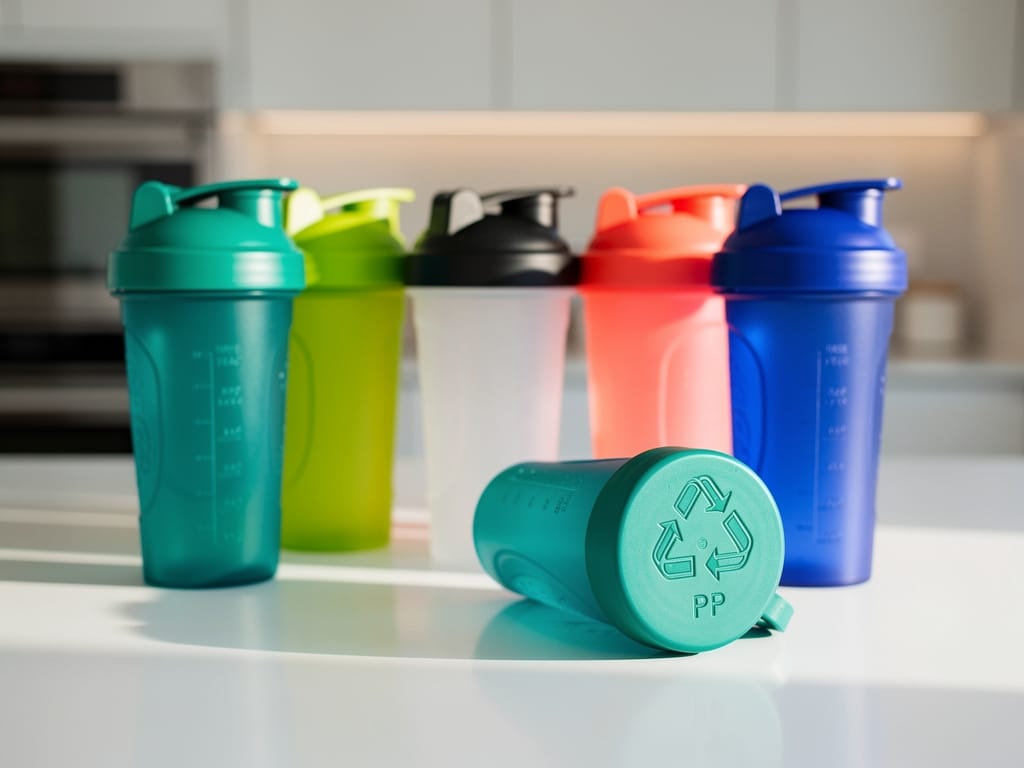
The easiest way to check is to flip your shaker over and look for the little recycling number inside the triangle. Here's a quick cheat sheet:
- Look for #5 (PP - Polypropylene): This is your new best friend. It's a sturdy, heat-resistant plastic that does not contain BPA. Most of the good quality shakers you see today are made from it. It's cloudy or opaque, not crystal clear.
- Be Cautious with #7 (Other): This is a catch-all category. It *could* include older, BPA-containing polycarbonate, but it also includes modern, safe plastics like Tritan, which is tough, clear, and BPA-free. If you have a #7, it's worth checking the manufacturer's website to see exactly what it's made of.
The Real Danger Lurking in Your Shaker
Ready for a plot twist? The plastic itself might not even be the biggest villain here.
The more immediate threat is probably the gunk from the shake you forgot to clean out two days ago. That old, damp, protein-rich environment is a paradise for bacteria and mold to grow. And drinking *that* is definitely not doing your health any favors.
Honestly, the funky smell from yesterday's shake is a much bigger red flag than the type of plastic it's in. Proper hygiene is your number one defense.
Your Simple Shaker Safety Checklist
Feeling a little more confident? Awesome. Here's a super simple action plan to make sure every sip you take is a safe one.
- Go for Glass or Steel. If you want to eliminate plastic worries entirely, these are your best bets. They're non-reactive, easy to clean, and last forever.
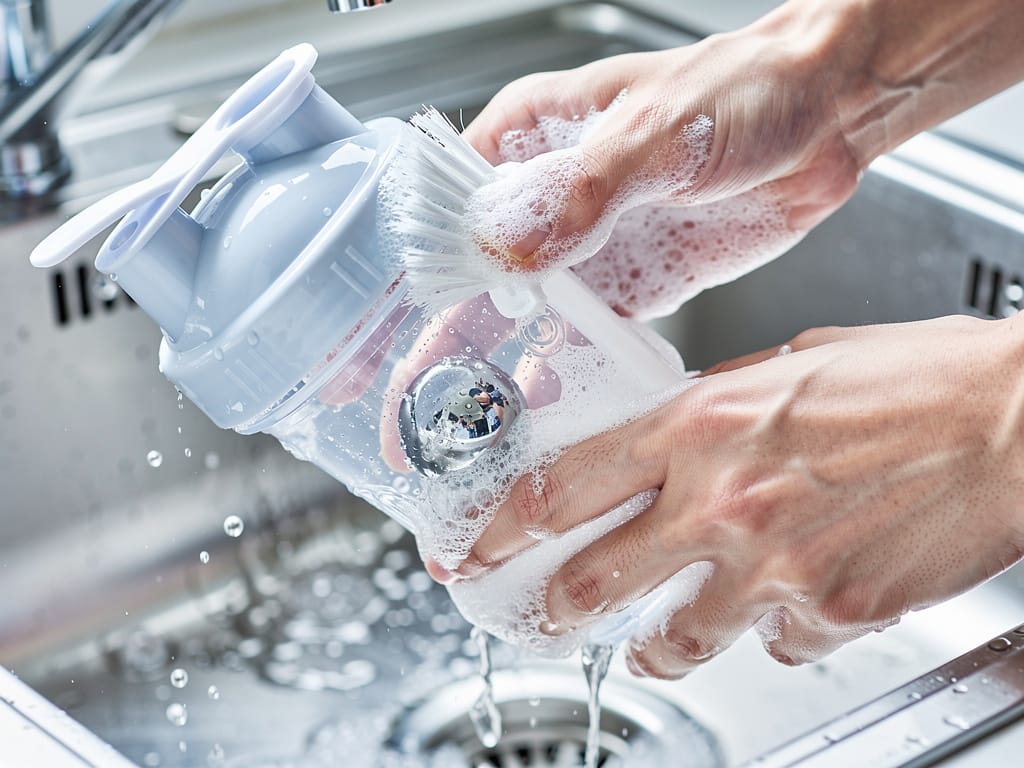
- Wash It. Immediately. I know, it's the last thing you want to do after a workout. But at least give it a thorough rinse as soon as you're done. Don't let it fester in your gym bag.
- Do a Weekly Deep Clean. Take it completely apart and soak it in a solution of warm water and a splash of white vinegar or a bit of baking soda. This helps kill off any lingering bacteria.
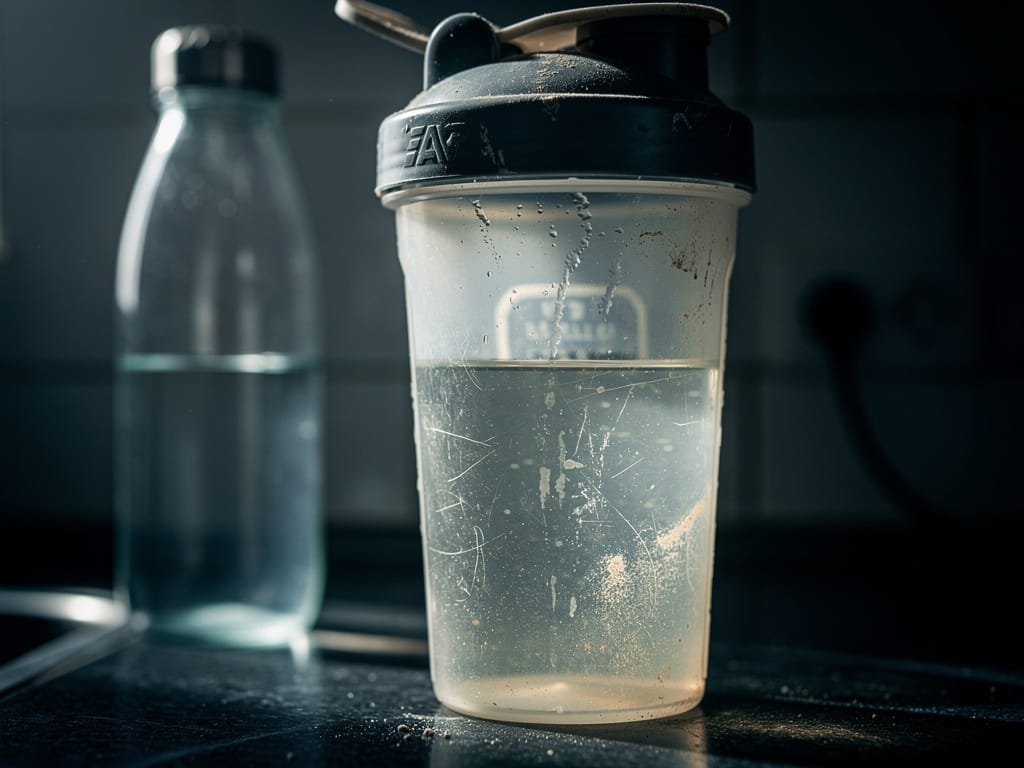
- Toss It When It's Torn Up. Deep scratches and gauges aren't just ugly; they're perfect hiding spots for germs and can potentially lead to more microplastic shedding. If your shaker has seen better days, it's time for a new one.
At the end of the day, you don't need to throw out your entire shaker collection in a fit of panic. It's all about being a smart and informed consumer. Check your plastic, but more importantly, just keep that thing clean. Your body will thank you for it.